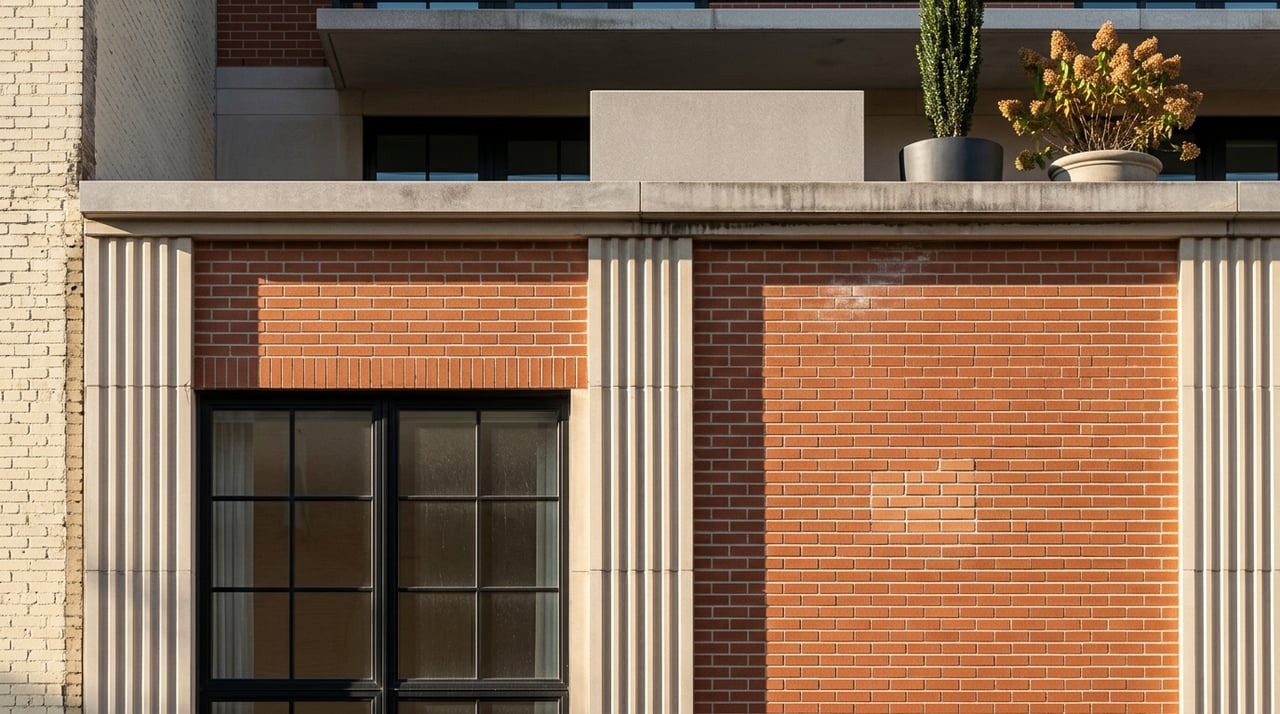
Union Square's Storefronts Are Full. Its Condo Listings Tell a Different Story
August 13, 2026
August 13, 2026
Walk the perimeter of Union Square this summer and you'll see why brokers keep calling it a comeback story. The Uniqlo flagship draws a line out the door. Time Out Market has claimed its ground floor. A rooftop bar just opened above the W hotel. By every retail measure, this is a neighborhood that has arrived.
So why are there only a few dozen condos for sale within it, and why do two different sources looking at the same few blocks paint such different pictures of condo prices? The retail story and the residential story in Union Square are not the same story. Understanding why is the difference between reading a headline and reading a market.
Storefront occupancy within the Union Square Partnership's business improvement district reached 90.1 percent as of June 2026, up 1.6 percent year over year, with 59,000 square feet of storefront space leased over the past 12 months. The district welcomed 51 new businesses over the past year, with food and beverage accounting for the largest share of openings, while traditional retail openings nearly doubled from the year before.
The names behind that number are specific. Notable openings include Uniqlo's 19,000-square-foot flagship at 860 Broadway, Time Out Market Union Square's first Manhattan location at 124 East 14th Street, Nespresso's more than 13,000-square-foot NYC flagship at 85 Fifth Avenue, and Guardian, the neighborhood's first rooftop bar, at W New York Union Square on Park Avenue South. Another 24 businesses are expected to open in the coming months.
The Uniqlo opening alone moved the needle for the district. The 19,000-square-foot space at East 17th Street and Broadway produced a 33 percent increase in district foot traffic on opening day compared to a typical Friday in 2025. Julie Stein, executive director of the Union Square Partnership, told Commercial Observer that the momentum was "a trend that has been a few years in the making."
City investment followed the retail lease-up. The first quarter of 2026 coincided with the launch of the 14th Street Plan, a public-private partnership announced by the city's Department of Transportation to modernize streetscapes and public spaces at major nodes including Union Square.
None of this is in dispute. What's worth pausing on is what it does and doesn't tell a buyer about the apartments sitting a block or two from that Uniqlo line.
Look at active condo listings around Union Square today and the pool is small. As of this summer, roughly four dozen condos were listed for sale in the immediate area, with a median asking price close to $2 million. That's a thin slice of inventory for a neighborhood this well known.
Now compare that to closed-sale data reported elsewhere for the same footprint, which showed a median sale price down more than 40 percent year over year, alongside a price-per-square-foot figure down close to 17 percent over the same period. Read those two numbers side by side and you'd assume you're looking at two different neighborhoods.
| What's being measured | What it shows | Why it moves so much |
|---|---|---|
| Median asking price, active listings | Near $2M across a small pool of listings | Reflects sellers' current expectations, not closed deals |
| Median closed sale price, recent month | Down sharply year over year | A handful of closings can swing the median in either direction |
| Median price per square foot | Down double digits year over year | Unit mix (studio versus full-floor loft) changes the average |
The gap isn't a market crash hiding behind a marketing push. It's a function of volume. When only a handful of transactions close in a micro-neighborhood in any given month, one large loft sale or one distressed studio closing can swing the reported median by tens of percentage points. Aggregators also draw Union Square's boundary differently. Some blend it with Flatiron, some pull it toward Gramercy, and the sample changes depending on which blocks get counted. A single-month median from any one source is not a market signal here. It's closer to a coin flip dressed up as data.
The deeper reason Union Square's condo pipeline is thin isn't mysterious once you look at what's actually under construction. This stretch of Manhattan was built out for office towers, rental buildings, and retail, not ground-up condominiums. Real new residential product is only now breaking ground, and there are essentially two projects carrying that entire story.
The larger of the two is The Greenwich Spire at 11 West 13th Street, developed by Legion Investment Group and EJS Group. The project closed $190.075 million in construction financing for 34 residences just south of Union Square. At 538 feet, it will be the tallest residential tower in Greenwich Village, designed by Kohn Pedersen Fox. The completed structure will span 111,022 square feet across those 34 units, an average of just over 3,000 square feet per residence. Sales were slated to launch by mid-2026, with completion not arriving until roughly mid-2028.
Legion's founder framed the bet plainly, as reported by New York Real Estate Journal: "Greenwich Village remains one of New York City's most resilient residential markets." Not everyone welcomed the scale of the answer. Village Preservation urged the Department of Buildings to reject the design, calling it, in the words reported by 6sqft, "appallingly out of scale" for the site.
The second project rising in the same corridor comes from a different developer. Nexus Development is building its own condo project at 31-35 West 14th Street, one of the two ground-up residential efforts that Commercial Observer flagged as evidence that the mixed-use momentum here extends beyond storefronts.
A proposed 29-unit building near 100 East 16th Street also drew scrutiny, as reported by Hoodline. It's a reminder that not every parcel near a hot retail corridor turns into inventory cleanly or quickly.
Zoom out to the borough and the scarcity looks structural rather than local. Only 81 new development condo units launched across Manhattan in the first quarter of 2026, roughly 75 percent below the ten-year average for that quarter. Union Square isn't an outlier in that respect. It's a sharper example of a citywide pattern: retail leasing moves faster than residential construction, and the gap between the two shows up first in neighborhoods where both are happening at once.
If you're weighing Union Square against Flatiron, Greenwich Village, or Gramercy, the practical takeaway isn't that Union Square is overpriced or underpriced. It's that the neighborhood-level median isn't a reliable yardstick right now. With so few closings each month, and with listing portals drawing the neighborhood's boundary differently from one another, a single data point can mislead you in either direction.
What actually holds up under scrutiny:
That last point is the one worth sitting with. A neighborhood can be genuinely improving in ways you can see and eat and shop your way through, while its home prices are still catching up in the data. For a buyer, that gap is either a warning or an opportunity, depending on how well you understand what's actually driving it.
Why do different sources show such different median prices for Union Square condos? The transaction volume is small enough that one or two closings can move the reported median significantly in either direction. Sources also draw the neighborhood's boundaries differently, sometimes folding in Flatiron or Gramercy blocks, which changes the underlying sample.
When will new condo inventory near Union Square actually be available? The Greenwich Spire at 11 West 13th Street was slated to launch sales by mid-2026, with completion around mid-2028. The Nexus Development project at 31-35 West 14th Street is on a similar multi-year timeline. Neither will add meaningful resale inventory before then.
Is Union Square the same market as Flatiron or Greenwich Village? For retail leasing purposes, the districts increasingly overlap, as several of the new condo projects near Union Square sit technically in Greenwich Village or on its border. For residential comps, treat them as related but distinct submarkets and compare buildings, not neighborhood averages.
Reading a neighborhood accurately means separating what's visible on the street from what's actually recorded in closings. If you're comparing Union Square to other Manhattan neighborhoods and want the building-level context that the aggregate numbers leave out, the Anable Podell Team can walk you through what's actually trading and what's still years from delivering. Request a Private Valuation to start the conversation.
Stay up to date on the latest real estate trends.
Etiam non quam lacus suspendisse faucibus interdum. Orci ac auctor augue mauris augue neque. Bibendum at varius vel pharetra. Viverra orci sagittis eu volutpat.