Selling A West Village Townhouse: The Paper Trail That Decides Your Price
July 23, 2026
July 23, 2026
A three-month median of $1.5 million with houses moving in 65 days, per Redfin's May 2026 read on West Village, sits in the same market where a contract was signed at $129 million for a single condo at 80 Clarkson Street. That gap is not a data error. It is the tell that West Village in 2026 is trading on two different curves, and which curve your townhouse lands on has less to do with the block than with the folder of paper you can hand a buyer's attorney on day one.
For sellers inside the Greenwich Village Historic District, that folder is the deal. The premium tier is still absorbing record prices for houses with clean landmark and Department of Buildings histories. The softening median is being paid, quietly, by owners whose exterior work never cleared review, whose brownstone has been deferred, or whose prior renovations show up in a title search as an open file. Understanding which side of that line your property sits on is the first pricing decision, ahead of any comp.
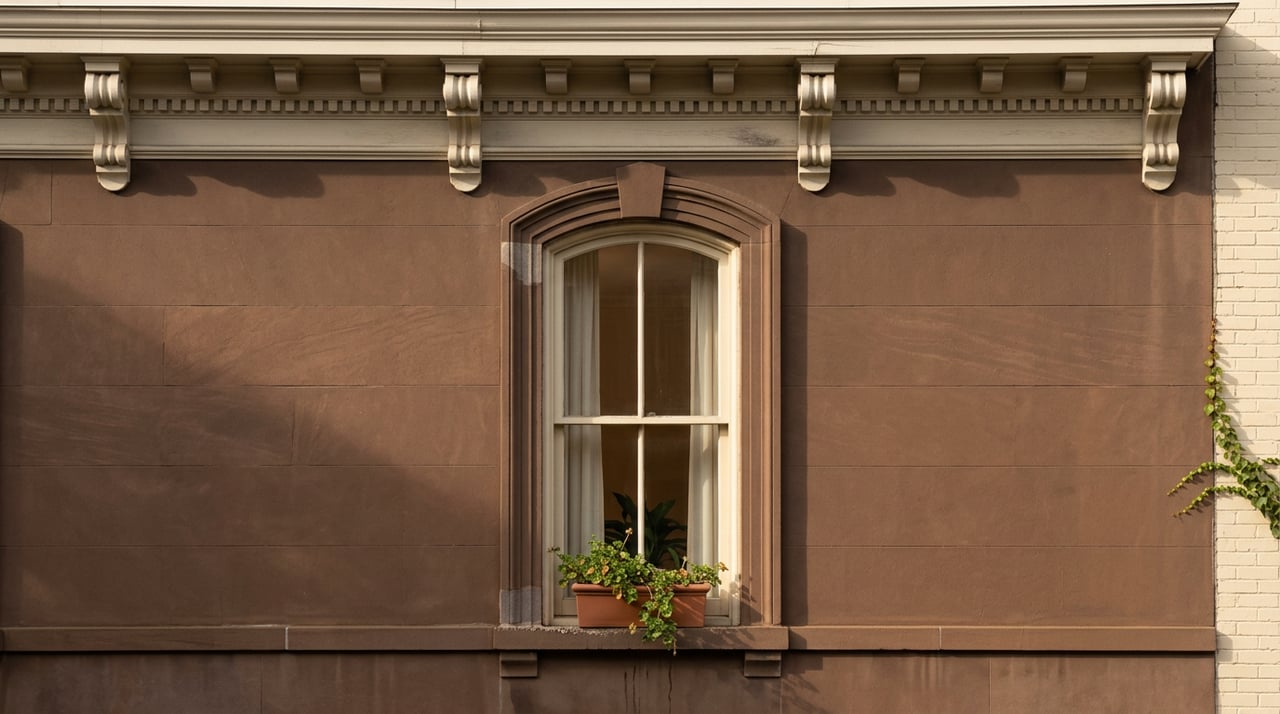
Roughly 80 percent of the West Village sits within a designated historic district, which means the Landmarks Preservation Commission has jurisdiction over anything a passerby can see: street facades, stoops, cornices, railings, storefronts, rooflines, rooftop additions, chimneys, and even mechanical equipment visible from the public way. Interior work is generally outside LPC review unless the interior itself was designated, which is exceptionally rare on the residential side.
What that jurisdiction produces, over the life of a building, is a paper record. Two documents matter most:
Sellers who can produce prior CNEs, CofAs, matching DOB permits, and final sign-offs for every visible change on the building are selling a different asset than sellers who cannot. The first group is negotiating on price. The second group is negotiating on contingencies, escrows, and whether the deal survives due diligence.
A townhouse contract in this district tends to fail on one of three exposures, and each one has a live 2026 example on the LPC docket.
The first is legalization of prior work. A pending Christopher Street application in the district seeks to legalize work already completed without LPC permits, including a reconstructed dormer and new windows, shutters, and a transom grille. When that pattern surfaces mid-diligence on your sale, the buyer's attorney is not asking whether the work looks good. They are asking who carries the risk of an LPC violation and a DOB re-file, and the answer is usually a price concession or an escrow that outlasts the closing.
The second is rear yard and rooftop scope. The 60 Bank Street proposal now before the LPC, designed by Sawicki Tarella Architecture + Design, is a textbook version: rooftop addition clad in standing seam zinc, rear facade modifications, parapet work, and sightline studies to prove the addition is largely concealed from Bank Street. Buyers of townhouses in 2026 increasingly assume they will do a version of this project themselves. If your house already has an approved envelope for a similar move, that approval travels with the deed and is worth real money. If your house is a candidate for that work but sits mid-block with tight sightlines, it is worth a conversation with a preservation architect before you set an ask.
The third is brownstone condition. A full facade restoration on an Italianate brownstone runs $300,000 to $800,000 in 2026 pricing, and LPC design guidelines require period-appropriate restoration rather than cheaper stucco-over or substitute-material repairs. Vinyl on primary facades is generally disallowed. Window replacement, when it is permitted at all, has to match original sightlines, profiles, muntins, and materials, often with a full-size mockup. A buyer walking a stoop can see a spalling brownstone. What they cannot see is that the LPC also treats prolonged neglect as actionable, so a deferred facade is not a maintenance question. It is a disclosed liability.
The headline number for West Village looks weak. Redfin shows the three-month median down 17.1 percent year over year through May 2026. PropertyShark's May 2026 read puts the neighborhood median at $1.2 million with the co-op median at $825,000, while the condo median moved the other direction to $4.3 million.
Read those numbers together with the broader Manhattan picture and the story sharpens. Miller Samuel's Q2 2026 report has the Manhattan co-op and condo median at $1.25 million, up 4.2 percent year over year, with average days on market at 95, up 21.8 percent. Ultra-luxury condo deals above $10 million rose more than 50 percent in that same quarter. The West Village number is not the Manhattan number. It is the residue of a mix shift, in which quiet, correctly papered luxury product is transacting at or near record levels while less prepared listings sit and eventually cut.
A West Village townhouse in 2026 is a bespoke asset. Condition, layout, lot characteristics, landmark constraints, and future capital needs move price more than any headline price per square foot.
That has a concrete implication for pricing. A comp pulled off a public portal will average the clean-paper sales into the discounted ones and produce a number that fits neither. The house across the street with an approved rooftop addition and a restored facade traded on a different curve than the house two doors down with an open violation. A defensible ask starts from a physical condition assessment and a document audit, not from a neighborhood median.
The work that determines your final price happens before the first showing. In order:
Done in that order, a West Village townhouse tends to trade closer to the top end of its condition-adjusted range and to close on the original timeline. Done in reverse, the same property tends to trade near the bottom of the range with escrows that keep the transaction open long after the closing dinner.
Generally no. LPC review focuses on features visible from a public way. Interior work is outside LPC review unless the interior has been individually designated, which is rare among Village residences.
The LPC favors repair and retention of original windows. Full replacement can require a CofA, often with a mockup, and vinyl is typically disallowed on primary facades. Replacing windows to freshen a listing without approvals is one of the most common sources of unpermitted-work findings in diligence.
Small in-kind repairs at the CNE level often clear in four to eight weeks. Visible alterations requiring a CofA generally run three to nine months at LPC, with DOB permitting on top. Rooftop or facade projects can run six to eighteen months start to permit.
The 2006 Greenwich Village Historic District Extension, which covers blocks such as the corner at 145 Perry Street, was designated in part to preserve a two- to four-story scale. Sellers on those blocks should expect closer LPC scrutiny of any rooftop or bulk-adding proposal, and buyers will price that in.
Selling a house in this district is a document exercise as much as a marketing exercise. If you own a West Village townhouse and want a discreet, condition-and-paper-based read on where your property sits inside the 2026 market, The Anable Podell Team will prepare a private valuation and a pre-listing document audit before any photograph is taken.
Stay up to date on the latest real estate trends.
Etiam non quam lacus suspendisse faucibus interdum. Orci ac auctor augue mauris augue neque. Bibendum at varius vel pharetra. Viverra orci sagittis eu volutpat.